转化追踪
Key Takeaways First
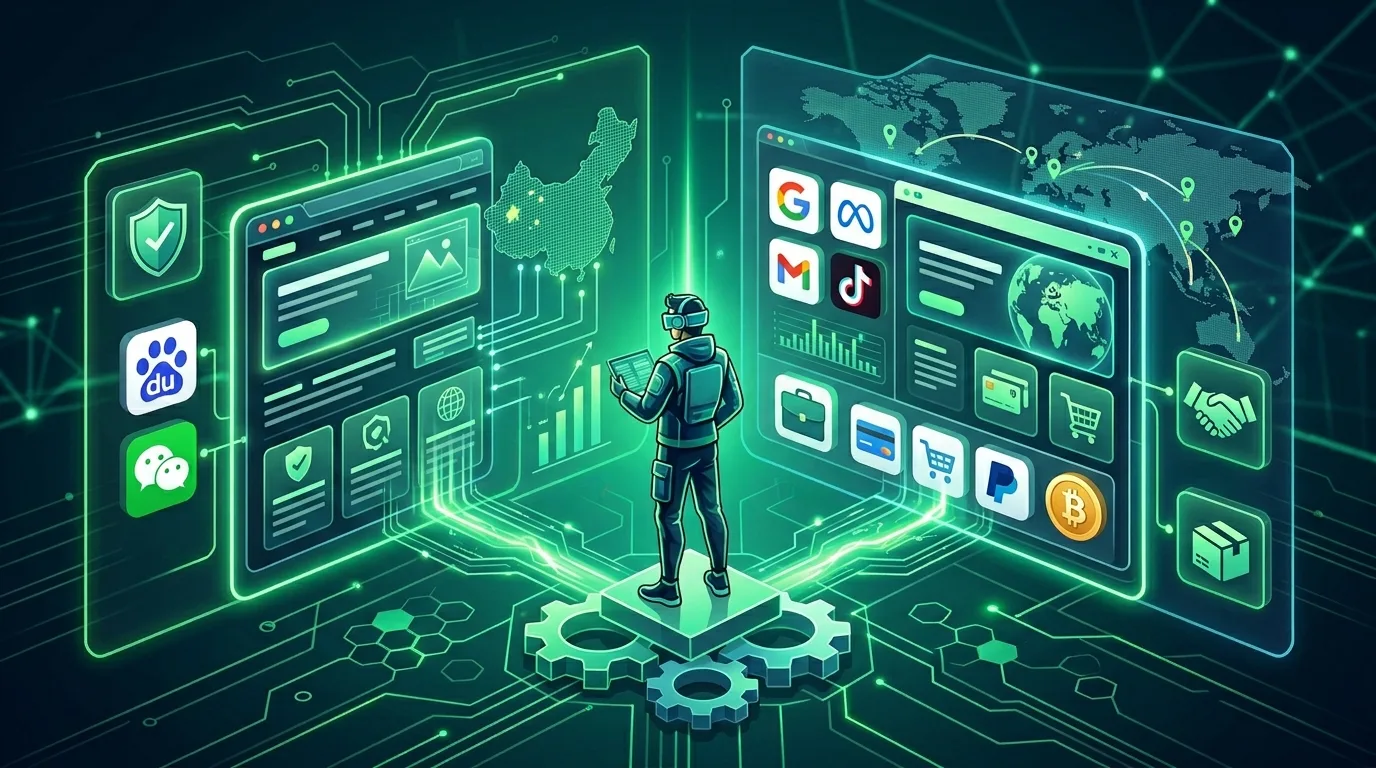
- Domestic website: Build trust, capture Baidu/WeChat traffic, and meet ICP compliance requirements
- Independent site: Capture overseas ad traffic, handle cross-border payments and fulfillment, and support customized B2B and B2C models
- Best practice: Run both sites in parallel with unified data and branding, and a shared tech stack
Advantages of an Independent Site
- Full control over user data and repeat-purchase outreach
- Supports multiple payment rails: Stripe, PayPal, cryptocurrency, and more
- Landing pages tailored for Google/Meta/TikTok ad campaigns
- Not affected by platform commissions or sudden rule changes
- B2B scenarios: Bulk inquiries, tiered pricing, enterprise CRM integration
- B2C scenarios: One-click ordering, cart optimization, subscription-based repeat purchases
Advantages of a Domestic Website
- Smoother Baidu SEO and WeChat ecosystem distribution
- Compliant display after ICP filing, boosting trust among local customers
- Easy integration with WeCom customer service, mini-programs, and official accounts
Technical Architecture Recommendations
| Scenario | Recommended Solution |
|---|---|
| Overseas-only B2C | Shopify / Headless Next.js |
| Overseas-only B2B | WooCommerce + inquiry module / custom multilingual build |
| Domestic-only | Next.js + custom CMS |
| Dual market | Shared design system, separate site deployments |
Common Mistakes
- Simply translating your domestic site into English as your independent site — conversion rates are usually poor
- Forcing ICP filing logic onto your independent site — the domain and registered entity should be kept separate
- Ignoring payment risk control and chargeback rates — these affect profits more than site building itself
- Mixing B2B and B2C page logic — inquiry and checkout flows should be designed separately
Need to cover both domestic and overseas markets? We can provide an all-in-one dual-site solution with differentiated design for B2B and B2C. Free consultation.